


Not many can say they’re cash flow positive and have more money coming in than they have going out. Consider leasing rather than purchasing cars, property, office furniture, machinery, and IT and telecommunications equipment. The benefit of renting rather than buying is that you will only have to make small monthly payments. Cost-cutting will have a more immediate impact on your bottom line than revenue-raising efforts. You could for instance place a freeze on bonuses and overtime payments. You could also reduce the number of employees through attrition or redundancy.
Cash flow is the net balance of cash moving into and out of your business at a specific point in time. The good news is that with some planning and other proactive measures, cash flow issues don’t need to be at the forefront all the time. Undertaking some long-term preparation and taking some other key actions can mitigate the problem. If your overhead costs are too high, your small business is going to experience cash flow problems. Costs like high rental costs, expensive car leases and travel can eat into your profits quickly.
Maintaining cash on hand helps companies gain quick access to it when they need it. The amount of money that is reserved should depend on the needs of the company. It just takes some planning and proactive thinking to make sure you maintain healthy cash flow, curb any cash flow problems, ultimately stay in business.
Learn How NetSuite Can Streamline Your Business
A cash buffer is essentially a financial safety net for your business. To determine how much cash buffer your business needs, you’ll divide cash balances by cash outflows. This will tell you the number of days that your cash on hand will be able to make up for no incoming cash flow. Outstanding payments are one of the biggest challenges SMBs face when it comes to cash flow. This is a real cash flow problem because you’ve done the work, yet you haven’t received the money for it. Not only are you out the profit, but you’re also out whatever it cost you to complete the job.
If you are looking to outsource Paychex can help you manage HR, payroll, benefits, and more from our industry leading all-in-one solution. If you find yourself trying to make the hard choice to lay off workers, consider these alternatives first. And if you think you have to shut your doors temporarily, ask yourself these four essential questions.
- Although technology can help with any sector of your business, Shvarts specifically recommends using it to create budgets and project cash flow.
- A low profit margin indicates that either your costs are too high, your price is too low or both.
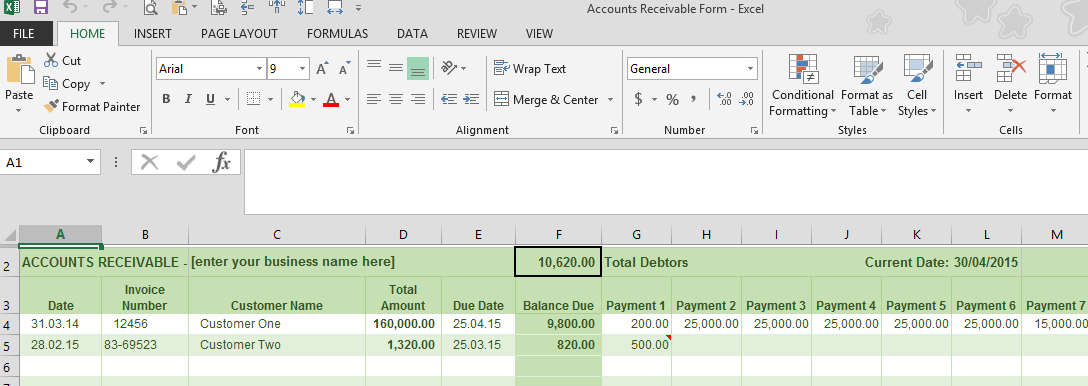
- Set up a continual collections process of reminding accounts receivable when and how much they owe you.
- For example, an investor or bank can withhold a portion of your funds if you don’t meet expectations or your income is much less than you projected.
The small outlay could pay big dividends as the money starts rolling in on a more regular basis. You might also consider offering discounts to quick payers as an incentive. It’s also important to evaluate potential clients using alternative intelligence.
This, in turn, means you won’t be able to pay your bills on time, which can lead to bigger problems, like making payroll in a timely fashion and facing questions of creditworthiness. If you want to improve cash flow, think about implementing some of the following strategies. Proper cash flow management is a key strategy that every business owner must master for long-term financial success. Managing cash flow can be one of the biggest challenges business owners face.
Working Capital (Net Current Assets)
Lagging sales and unpaid bills all lead to stormy waters and trouble with cash flow, but fortunately there are several steps you can take to right the ship. The three primary classifications of cash flow are cash flow from operating activities, Cash flow problems cash flow from financing activities, and cash flow from investing activities. All will appear on the statement of cash flows on a company’s financial statements. Increasing your prices is a concept that scares many business owners.
A few slow months however and that can quickly turn into a poor decision and an unnecessary expense bogging down the business. “Cash flow” refers to the net funds moving into and out of your business during a set period. And this focus is exclusively for realized funds—or cash—rather than credit lines, unearned revenue, or anything else that might appear as an income or expense on your typical balance sheet. Cash forecasting is the number one priority for treasurers, as their job and core responsibility is to have complete control, management, and oversight of the finances within a company. It’s extremely important for a treasurer to have accurate, real-time data and forecasts so that they can make the right decisions for their company and avoid any financial turmoil.
- Conversely, if your prices are too low, people may perceive your product as less valuable or of lower quality.
- Even growing, profitable companies can be hit with cash flow problems if their finance, operations, and/or investing activities aren’t running efficiently.
- Try negotiating shorter customer payment terms to address outstanding invoices.
- You can do this by paying off your loans faster, refinancing your debt at lower interest rates, increasing your retained earnings, or raising more capital from investors or shareholders.
- Both service-based businesses and those with physical inventory can face cash flow issues.
- The right tools can digest your business data to identify patterns beyond human perception, providing new insights.
Further, you’ll want to spend sufficient time vetting any existing or potential customers you are considering to offer credit terms. After all, allowing a struggling or unresponsive business to secure goods and services without up-front payment leaves you vulnerable to building up bad debt and losing revenue. The first step to managing your cash flow is to know where your money is coming from and where it is going. You need to track your income and expenses regularly, preferably on a weekly or monthly basis, and use a tool like a spreadsheet, an app, or a software program to record and categorize them.
How to fix cash flow problems
Arora suggests identifying parts of the operation that can be outsourced to freelancers and third-party providers. This will allow you to get the job done without providing salary and benefits. He also suggests that businesses scale back part-time staff during slow periods. There are several tools and software applications designed to help you track your business’s money.

Reviewing your profit margin and tracking it over time can give you insight into your pricing and cost details so you can see whether something needs to change to help improve your business cash flow. Whether you’re scaling up or just need a quick infusion of cash, you might turn to a lender for help. A line of credit can certainly help if you’re dealing with cash flow problems. However, be sure that you’ll be able to repay the debt, or it will just end up as another bill you’re struggling to pay. A positive example of using this method would be to take out a short-term loan when you’re waiting for a large payment from a reliable client.
How Can a Fractional CFO Help You Save Money?
That money can affect future opportunities, so you don’t want it to sit around. You can do this by making short-term investments and using the money to pay off debts faster. That way, the money will benefit you through generated interest or shorter loan terms.
The Art of Bankruptcies & the Value Investment Process- From … – DataDrivenInvestor
The Art of Bankruptcies & the Value Investment Process- From ….
Posted: Tue, 22 Aug 2023 11:53:44 GMT [source]
While businesses can run on a cash or accrual basis, Rohit Arora, CEO of small business loan provider Biz2Credit, advises every business to take advantage of both. Wise offers a variety of easy and convenient solutions to help you manage your business’ finance. Find all your currencies in one place, with one account for more than 50 currencies, so you can connect with customers and suppliers overseas.
While sometimes you need to spend money to make money, there’s also the issue of spending too much money. If you find your overhead is getting out of hand, it’s time to dig into where your biggest expenses are and how you can reduce (or even eliminate) them. Just because you’ve received a payment doesn’t mean you have access to that money. With electronic payment processing, there’s often a delay between the time the payment was made and the moment the cash is accessible in your account(s).
Whenever possible, use free cash flow to repay the loan and bring your balance (and interest costs) down. Additionally, you can identify new revenue streams to help pay the loan back or look at current costs and expenses to reallocate some of the money to loan payments. However, if you are not mindful when managing the business’ capital/free cash flow, it could lead to trouble. Not investing enough will hamper your growth as a business, and it’ll get increasingly difficult to stay in the market without suffering as a business.
But if these losses are unintentional — such as increased shipping costs or energy use — increased sales may result in a shrinking bank account. Making sales is great, but if it’s not backed up with the customers paying on time, you’ve got problems – and there are many potential causes of late payments. Collecting your trade receivables too slowly can seriously inhibit your cash flow opportunities, stifling growth and potentially causing you problems with paying your own bills. In essence, a cash flow problem can be defined as a situation where total debt exceeds total revenue in a given time period, resulting in a net negative flow of cash into the business. These problems are incredibly damaging to business operations, as negative cash flow makes it much more difficult to deploy capital or invest in growth. In the worst case, cash flow problems can lead to insolvency – the inability to pay creditors in line with established payment terms.
Although working on your products and services is essential for future growth, the most important thing to bear in mind is the timing. Putting money into developing a new product line or service, or launching in a new country, all requires cash up front and won’t have immediate returns or could be slower than you had predicted. A key way to ensure that cash flow is being managed is to do a cash flow analysis at regular intervals to monitor the business and its financial health. Think about your portfolio, marketing strategy, competitors, current funds, inventory, and a rough budget for everyday operating factors. You’ll also need to add employee costs to this calculation, as well as key performance metrics, forecasts, income projections, and more.
التعليقات مغلقة.