

For example, the mining industry has a benchmark of about 25% to 35% for gross profit margin, while farming benchmarks could start at 20% for net operating profit. Operating profit margin is calculated based on the operational side of the business. It considers operating costs and profits made from operational activities. For example, https://kelleysbookkeeping.com/accounting-cycle-definition/ rent, utilities, office supplies, and payroll are necessary to run everyday operations of the business, so these are considered operating costs. Calculating a company’s gross margin involves dividing its gross profit by the revenue in the matching period, which are both metrics found on the GAAP-based income statement.

Gross profit margin is used to determine the percentage of profit gained after deducting the production costs, known as the cost of goods sold (COGS). By analysing the profitability of different products and services, companies can determine which products or services are most profitable and adjust their pricing accordingly. This can help companies maximise profitability and remain competitive in the marketplace. To calculate operating margin, start by subtracting the cost of goods sold (COGS) and administrative expenses from net sales. There is a gross profit margin (bigger) and a net profit margin (smaller). So a good net profit margin to aim for as a business owner or manager is highly dependent on your specific industry.
Three Primary Levels of Profit
All three have corresponding profit margins calculated by dividing the profit figure by revenue and multiplying by 100. To calculate the operating profit margin from the income statement, determine the amounts for the business’s gross profit, operational costs, and revenue. XYZ Company is in the online retail business and sells custom printed t-shirts. The gross profit margin can be used by management on a per-unit or per-product basis to identify successful vs. unsuccessful product lines. The operating profit margin is useful to identify the percentage of funds left over to pay the Internal Revenue Service and the company’s debt and equity holders.
What does 20% profit margin mean?
The profit margin is a financial ratio used to determine the percentage of sales that a business retains as earnings after expenses have been deducted. For example, a 20% profit margin indicates that a business retains $0.20 from each dollar of sales that it makes.
Margins can also be used to identify areas of a company’s operations that may be inefficient or not cost effective. By analysing the profitability of different product lines, companies can identify areas where costs are too high in relation to the profits generated. Profit Margin Formula This information can then be used to optimise operations and reduce costs. For our example modeling exercise, we’ll be calculating and comparing the gross profit margin of three companies, with each having different revenue and COGS assumptions.
Profit Margin Example
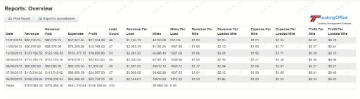
Gross profit margin can be beneficial when determining the profit from a specific product line. It shows the markup of specific products and can give insight when making pricing decisions. As in the case of all profitability metrics, the gross margin should be used in conjunction with other metrics to fully understand the cost structure and business model of the company. Once deducted, the gross margin percentage can be computed by dividing gross profit by the amount of revenue generated in the corresponding period. As you can see from the screenshot, if you enter a company’s revenue, cost of goods sold, and other operating expenses you will automatically get margins for Gross Profit, EBITDA, and Net Profit.
- Operating profit is how much money the company has left over after covering operating expenses (like COGS and employee wages), but before paying taxes and interest.
- By considering the above factors along with the profitability margins covered in this article, you’ll be well on your way to performing complete financial analyses.
- BeProfit is the most accurate profit calculator & data analytics dashboard for eCommerce businesses.
- By comparing profit margins over time, investors and analysts can assess whether a company’s profitability is improving or deteriorating.
- She might produce a small batch of the new clothing and see how those items sell.
- Excluded from this figure are, among other things, any expenses for debt, taxes, operating, or overhead costs, and one-time expenditures such as equipment purchases.
Gross margin is equal to $500k of gross profit divided by $700k of revenue, which equals 71.4%. As you can see in the above example, the difference between gross vs net is quite large. In 2018, the gross margin is 62%, the sum of $50,907 divided by $82,108. The net margin, by contrast, is only 14.8%, the sum of $12,124 of net income divided by $82,108 in revenue.
Who Needs to Calculate Profit Margins?
Some methods may work better depending on the business, the industry, and customer base. Profit margins are important whilst seeking credit and is often used as collateral. They are important to investors who base their predictions on many factors, one of which is the profit margin. It is used to compare between companies and influences the decision of investment in a particular venture. To attract investors, a high profit margin is preferred while comparing with similar businesses.
Profit margins are one of the simplest and most widely used financial ratios in corporate finance. A company’s profit is calculated at three levels on its income statement. This most basic is gross profit, while the most comprehensive is net profit.
To find profit margin, divide gross income by a company’s revenue then multiply the result by 100 to make it a percentage. Operating profit takes into account both the cost of goods sold and operating expenses such as selling, general and administrative costs (otherwise known as SG&A). Sometimes this is unavoidable; you will need to pay for supplies, website hosting, employee salaries, and many other expenses. But by tracking your expenses, you’ll be able to identify unnecessary expenses that can be trimmed to increase your profit margin. Having said that, you can use a scale of how a business is doing based on its profit margin.
A lower profit margin doesn’t necessarily mean that a company isn’t making money. On the contrary, most of these businesses compensate for lower profit margins by increasing the volume of customers, products, or materials sold. Profit margins are used to determine how well a company’s management is generating profits. It’s helpful to compare the profit margins over multiple periods and with companies within the same industry.
As one would reasonably expect, higher gross margins are usually viewed in a positive light, as the potential for higher operating margins and net profit margins increases. An accurate assessment of the gross profit metric depends, however, on understanding the industry dynamics and the company’s current business model. Calculating the net profit margin is very similar to the steps for gross and operating profit margin, but requires the entire company’s revenue and costs. Divide the company’s net income (the profit after expenses are deducted from gross income) into total sales, then multiply the result by 100 to get the answer expressed as a percentage. Gross profit is revenue (or net sales) minus the direct cost of goods or services.
The higher the number, the more profit the business makes relative to its costs. Many businesses regularly eliminate low-performing inventory or change their service offerings. But cutting low performers will lower your costs and increase your sales, which will raise your profit margin as well. If you are a business owner, improving your profit margin is an important part of growing your company. Your profit margin shows how much money you make from every dollar of your gross revenue. When you improve your profit margin, you actually make more money without needing to increase sales or gross revenue.
You may find it easier to calculate your gross profit margin using computer software. Before you sit down at the computer to calculate your profit, you’ll need some basic information, including revenue and the cost of goods sold. Gross profit margin shows whether a company is running an efficient operation and how profitably it can sell its products or services.
- As you can see from the screenshot, if you enter a company’s revenue, cost of goods sold, and other operating expenses you will automatically get margins for Gross Profit, EBITDA, and Net Profit.
- Gross profit margin shows whether a company is running an efficient operation and how profitably it can sell its products or services.
- Gross profit margin is the percentage of your business’s revenue that exceeds production costs.
- Calculating a company’s gross margin involves dividing its gross profit by the revenue in the matching period, which are both metrics found on the GAAP-based income statement.
التعليقات مغلقة.